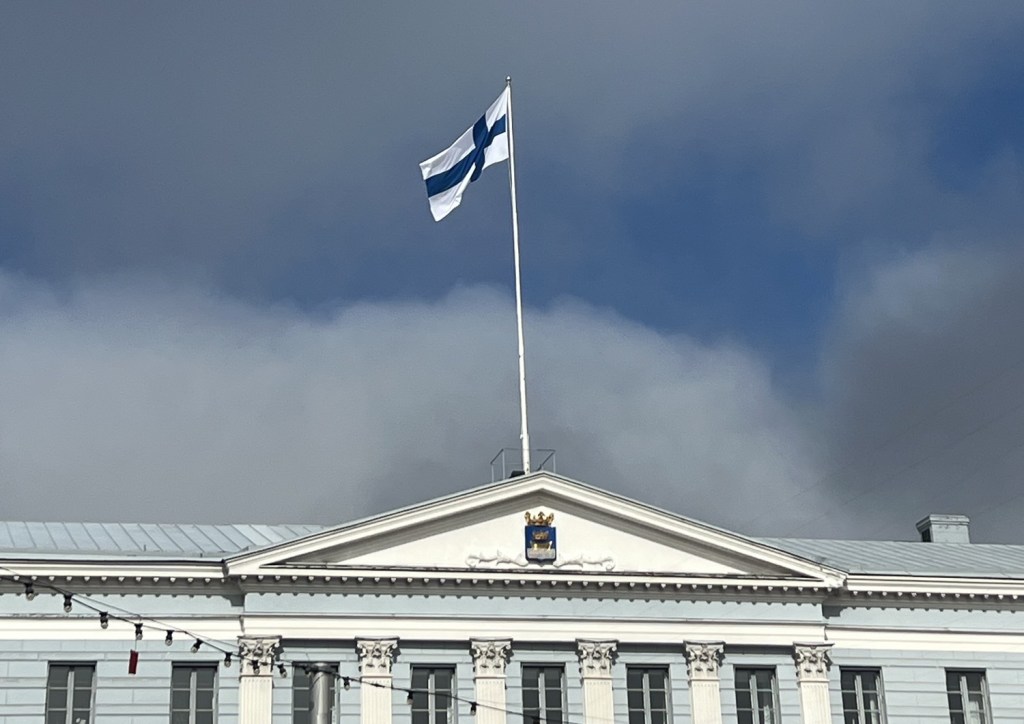
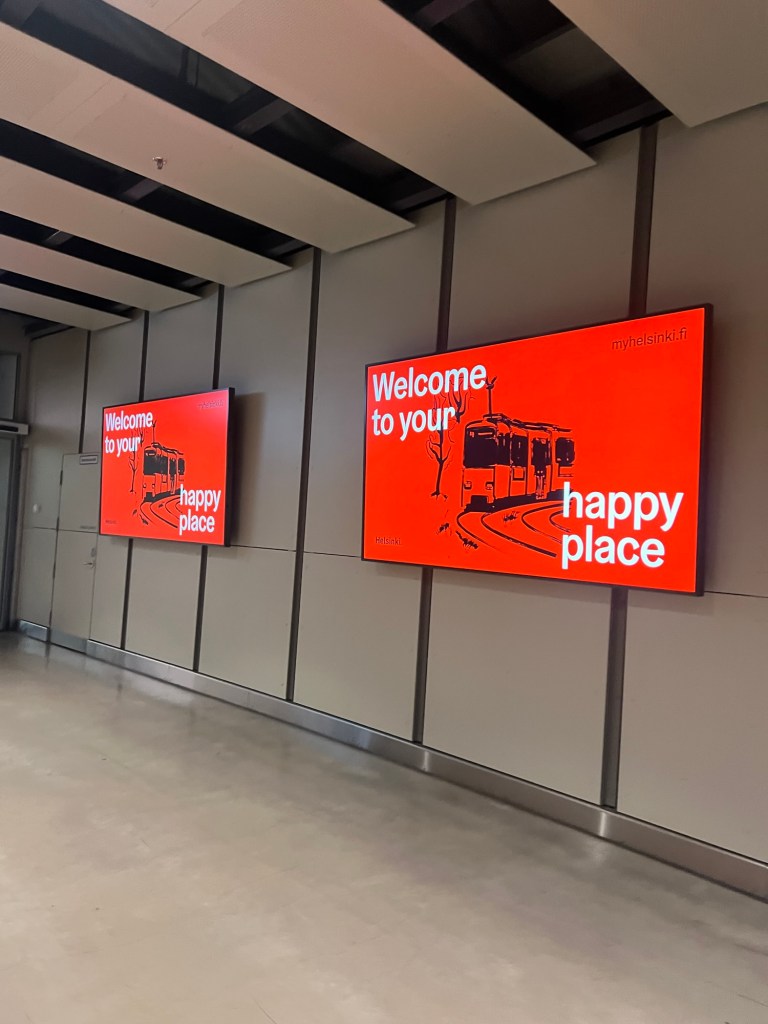
Touchdown in sunny Helsinki and I was quickly greeted by billboards proudly reminding me and my fellow passengers that Finland is the world’s happiest country – ranked number one for the eighth consecutive year in 2025. Famous for its baby box tradition and the first Nordic nation to legislate ‘Health in All Policies’, Finland’s reputation for prevention is well deserved, with low levels of child poverty and high educational attainment.
Between meetings, I sampled the creamy local salmon soup and sauna culture – and, like many visitors, I left Helsinki happier than when I arrived. In this blog, I’ll share what I learned about Finnish school-based prevention, family centred services and their approach to mental health.
Helsinki’s healthcare services
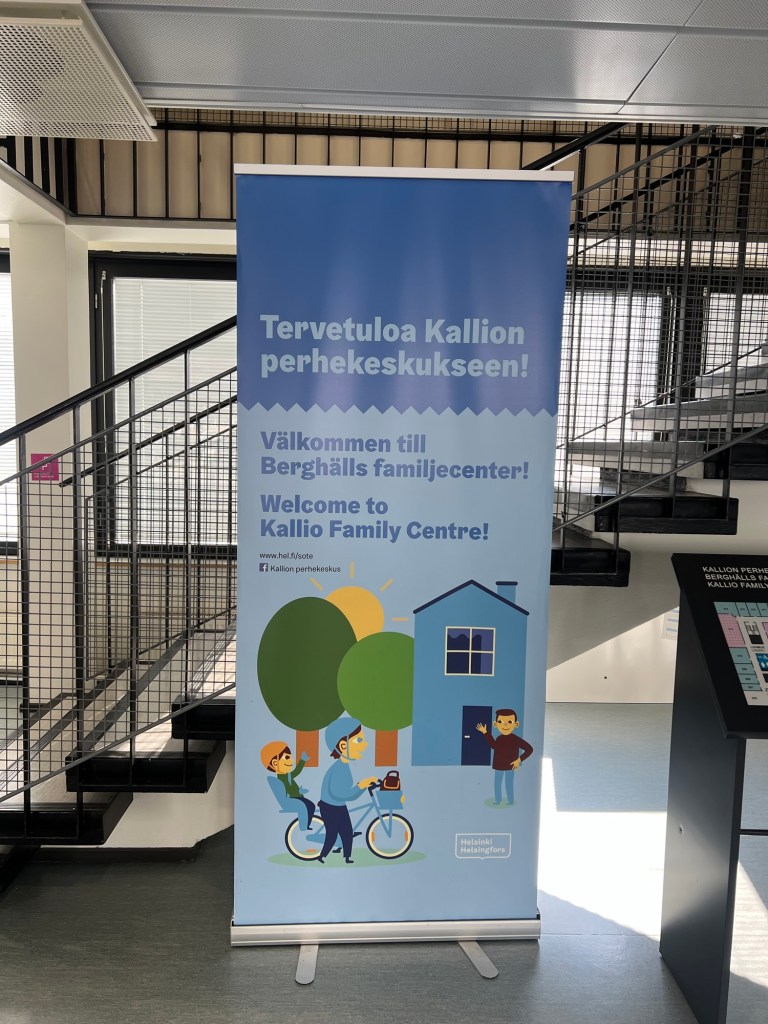
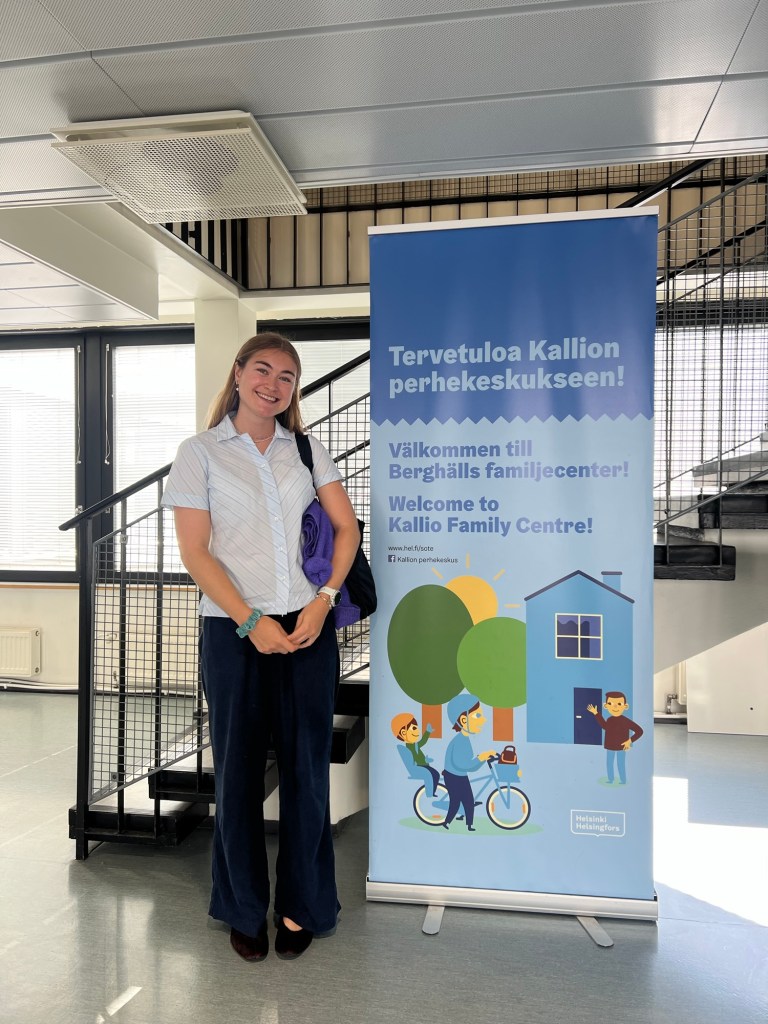
Finland’s social healthcare services are brought together into three main hubs: family centres, health and wellbeing centres and senior centres. During my visit to Helsinki, I stopped by the Kallio Family Centre, where Project Manager, Virpi and Director of Nursing, Sanna, welcomed me. Here, every family with children under 18 can access a range of services from maternity care to specialist interventions like speech therapy – all under one roof. Not only does this provide a community space for users, it is also a network hub for health workers.
Virpi explained some their impressive digital tools like Apotti, the world’s first system to integrate information for both health and social services, such as family counselling. With their Marisa customer portal, families can book appointments and manage medical and social needs from their phone.
Our discussion turned to the role of school health care. In Finland, this is a statutory, free for all service, tightly linked to the family centre network. Each local authority is required by law to maintain school health and welfare services for all pupils, which must include school public health nurses, school doctors, and access to psychologists and social workers. All pupils receive an annual assessment by a school nurse, covering emotional wellbeing, sleep, diet, screen time and more. In grades 1,5, and 8, these reviews are even more extensive, involving the school doctor, a psychologist and the child’s parents/guardians.
They were honest about the system’s challenges, including shortages of school doctors and the quick evolution of youth health issues like nicotine, digital wellbeing and obesity. To respond, they are piloting models where doctors visit schools and coordinators from both health and social services help children facing complex needs who need a variety of health professionals.
I came away with a taste of what the UK’s future approach to neighbourhood care could look like if we embraced the same ethos, and inspired by the holistic, stigma-free health and wellbeing support in schools.
KiVa: Shaping the Whole School Ecosystem
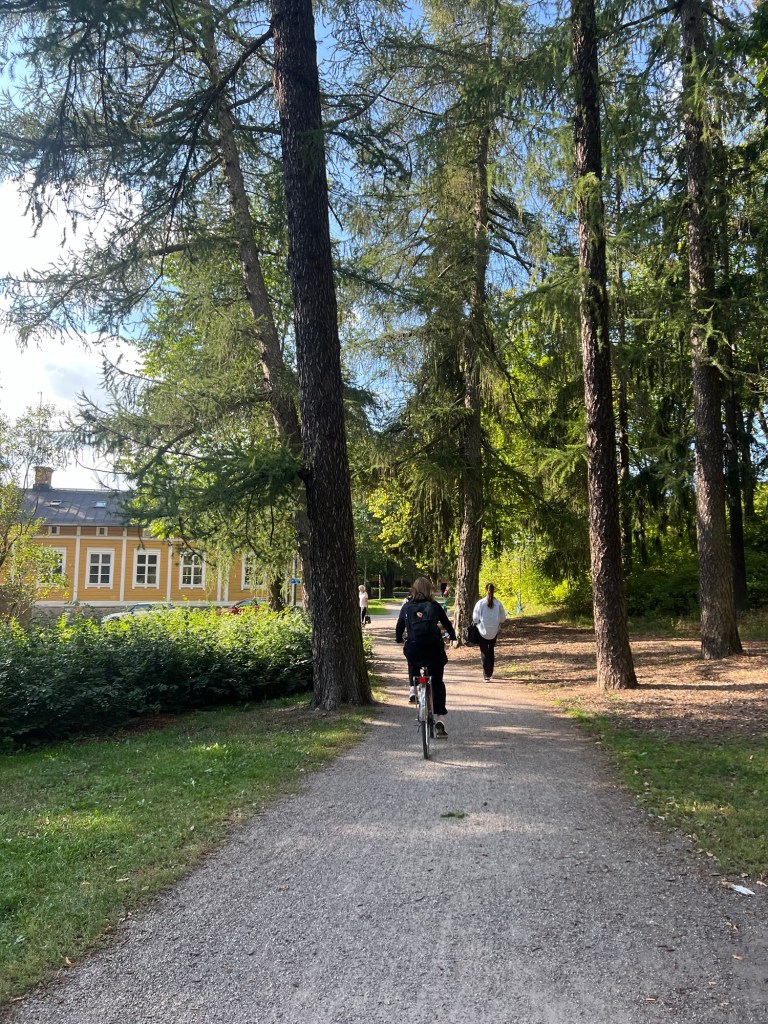
I took the train to Turku to learn more about Finland’s pioneering school-based interventions. Over a Finnish lunch, just off the University’s campus, I spoke to Christina, designer of the now-famous KiVa anti-bullying programme.
The roots of KiVa stretch back to the late 1990s when a tragic school killing shone light on bullying as much more than ‘kids being kids’. Many schools lacked the expertise or tools to act, so Ministry of Educaiton partnered with Christina and her colleagues KiVa: a systematic research driven solution to bullying.
Now adopted in over 20 countries worldwide, KiVa is built on the idea that every pupil deserves access to evidence based intervention. The KiVa programme encompasses regular surveys from both staff and students, a dedicated ‘KiVa team’ (often with teachers and social workers). As Christina explained, bullying often rewards status, so the programme is designed to shift peer norms and empower “active bystanders” undermining the social value of bullies. Rather than treating bullying as the work of a ‘bad apple’, the KiVa success comes from shifting norms and peer culture.
Parental engagement is a known challenge, but clear guidance helps schools reinforce these behaviours even when homes may not. As Christina put it, ‘We can’t change every home, but every school can model these skills’. For me, the core lesson I took away was about changing the environment, not just individuals.
Youth-led Prevention Project – Substance Use
My next meeting was with Minna, one of the researchers leading the Vinssi Project, which aims to:
- Develop and evaluate new, low-threshold participatory models for youth lifestyle guidance, with a particular focus on preventing and supporting nicotine cessaton
- Strengthen health education in lower secondary schools and integrate health promotion more closely into young people’s everyday environments
- Provide information and tools for guardians, helping them to discuss substance use and its effects at home and in cooperation with schools
Working with lower secondary schools, the Vinissi project implements several practical measures. Minna explained that student’s don’t just receive information, they help co-design events, run ‘health kiosks’ and plan peer driven campaigns.
Although it’s too early in the project to share results, early pilots suggest that the project is expected to create a sustainable model that becomes embedded in everyday school practices, strengthen young people’s health literacy and enhance youth participation. Watch this space.
Mental Health with MIELI
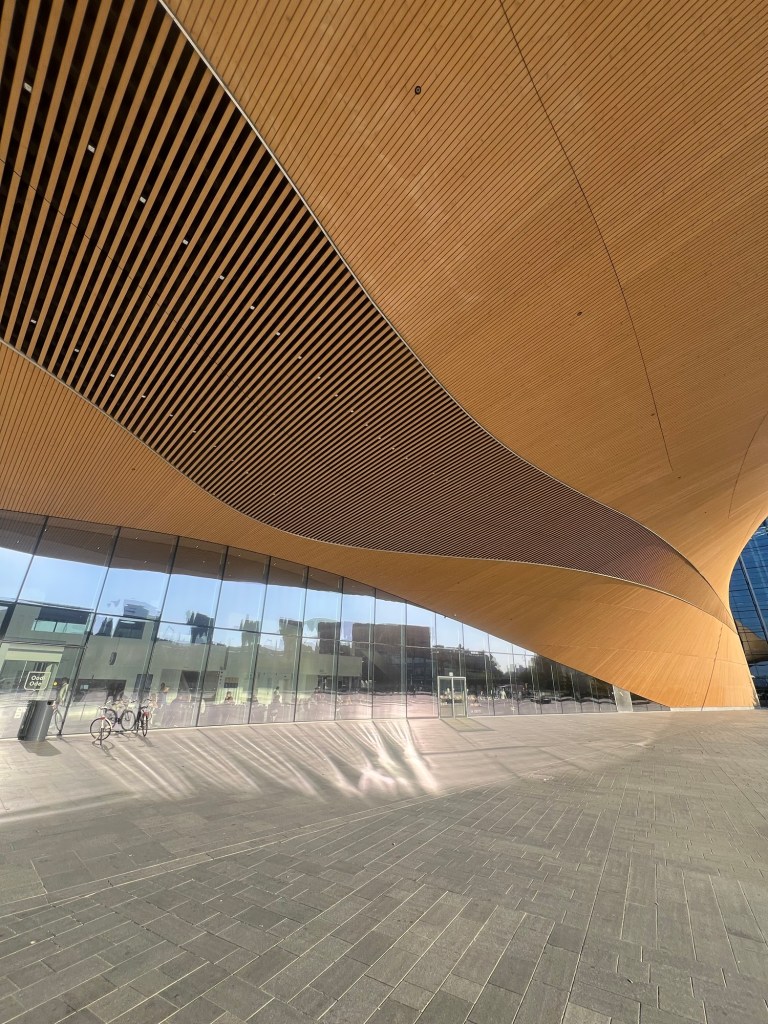
Whilst poignant, it felt fitting to sit with Sanna, Director of Crisis at MIELI, Finland’s oldest NGO, and former deputy mayor of Helsinki, on World Suicide Prevention Day.
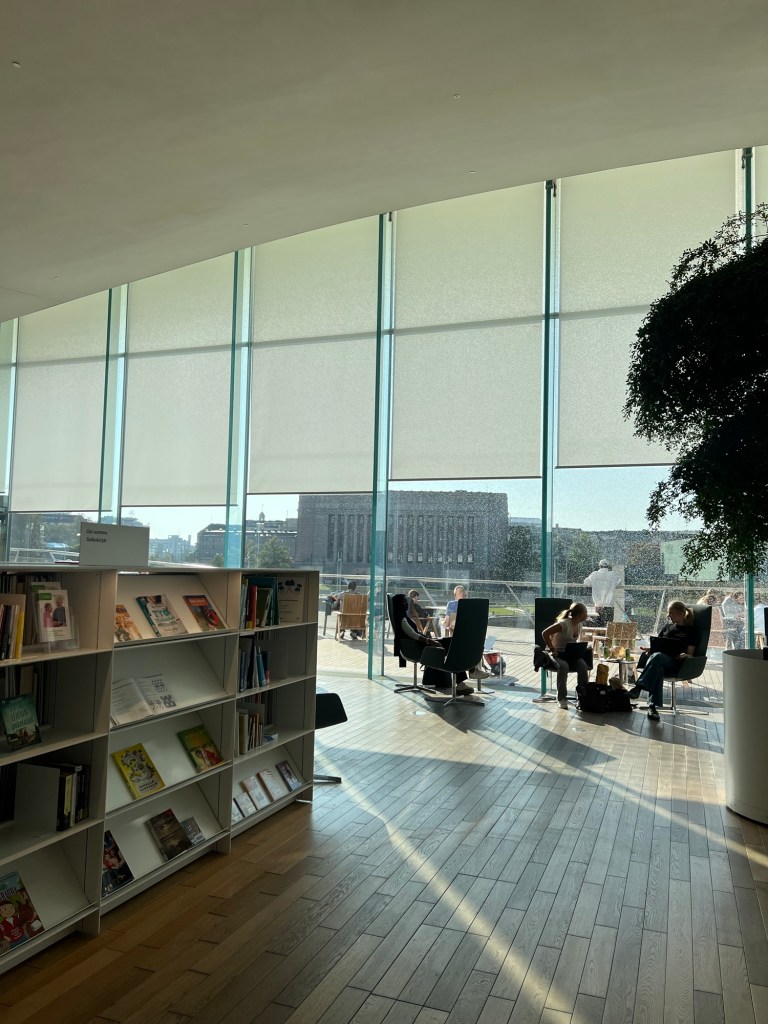
Looking out at the views from Oodi Library, she shared her insights into Finland’s evolving approach to children’s and youth mental health which, despite strong foundations, faces rising pressures.
Sanna described Finland’s ‘therapy guarentee’ – from May 2025, all young people under 23 must get timely access to mental health support, with new legislation ensuring that treatment starts within 28 days of assessment. Yet delivering on the promise is challenging with shortages of school psychologists.
Mental health and emotional skills feature in the national curriculum, and NGOs like MIELI provide training not only for teachers, but also for adults working in youth clubs. Universal systems, such as family clinics and after school care, reduce stigma and make it easier for families to ask for help. Importantly, Finland’s move towards youth participation (every region and city must now have a youth council) means young voices increasingly shape politics and priorities at every level. Despite this, youth mental health trends have plateaued. Sanna reflected on the power of peer support for parents struggling to help their children and the benefits of keeping mental health policy rooted in community ties: ‘You can’t have a professional next to every young person, but you can have a parent, a neighbour, a teacher who knows how to listen’.
Reflections
- How might the UK more routinely move beyond focusing on individuals to tackling the whole environment?
- What can be learned from the Finnish youth-led participatory projects, especially as digital risks grow?
- How does involving youth in politics, through youth councils, change policies and services?
- Could the UK embed a Health in All Policies (HiAP) approach – making every policy decision across sectors accountable for its impact on health and wellbeing, as Finland has done?
Finland in Pictures


 Nordic Lessons